The desert camp night is the part of a Morocco tour people remember most, and it is also the part they know least about before arriving. Here is the shape of the evening.
Late afternoon: the ride in
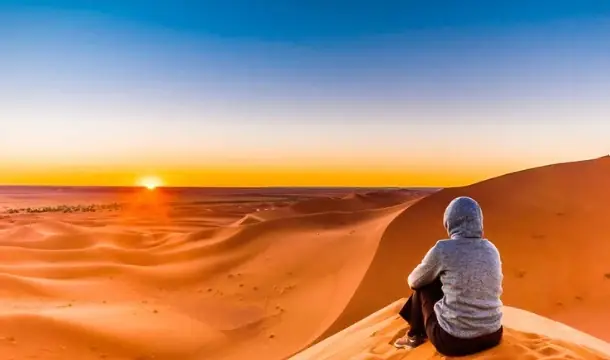
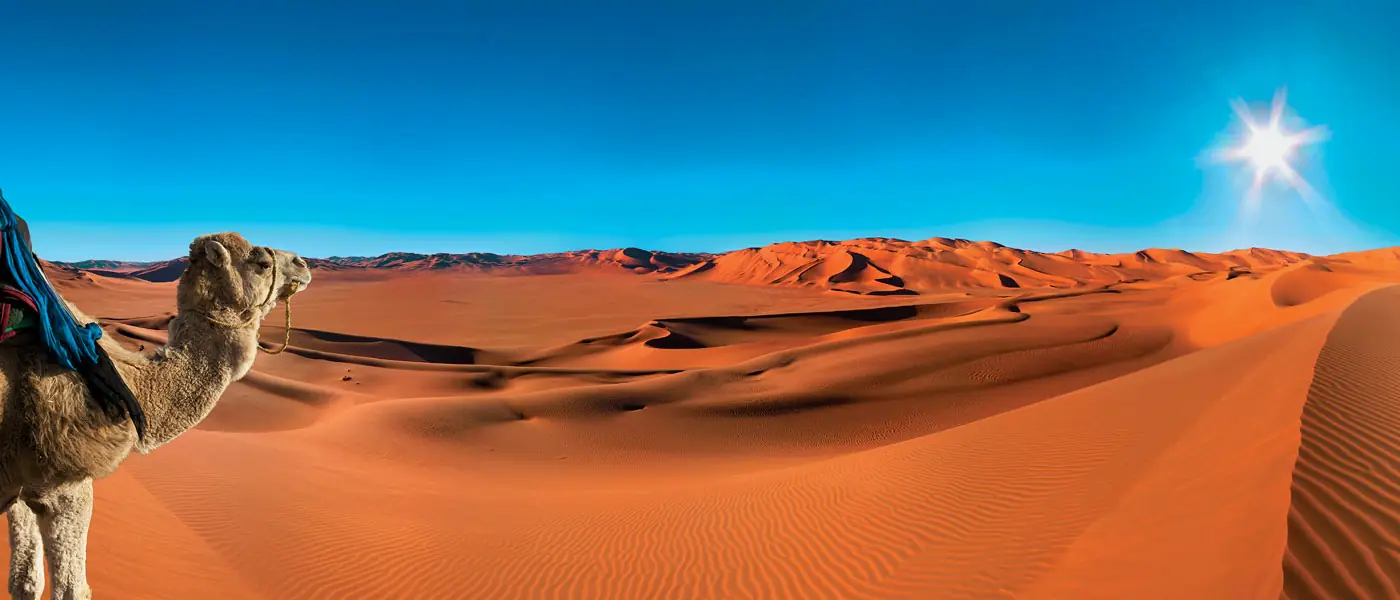
You leave your vehicle at the edge of the sand in the late afternoon, take an overnight bag and ride by camel into the dunes, usually for around an hour and a half. The timing is deliberate: you arrive as the light goes gold and the sand changes colour.
Camels are not the only way in. If riding is uncomfortable or you are travelling with small children, a 4x4 can take you to the camp instead — just say so beforehand.
Evening: dinner under the dunes
Dinner at camp is usually soup, a tagine and fruit, eaten together in a communal tent. Afterwards the crew often play drums by the fire, and most people climb the nearest dune in the dark to look at the sky, which is the real reason to sleep out here.
The tents themselves
Camps vary, and the comfort level is something you choose when booking rather than something fixed.
- Standard camps: rugs, proper beds, blankets, shared bathroom tents
- More comfortable camps: private bathroom with a hot shower in your own tent
- Power is solar and limited — bring a power bank for phones and cameras
- Nights are cold outside the summer months; blankets are provided
Morning: sunrise and back out
You are woken early, because sunrise over Erg Chebbi is worth being awake for. After breakfast you ride or drive back out and continue the itinerary — often towards Todra Gorge and the Dades Valley, or north up the Ziz Valley.
Two nights instead of one
One night is enough to experience the desert. Two nights is what changes it from a stop into a place: a full day around Merzouga for the nomadic villages, the black dunes at Khamlia, Rissani market and a 4x4 excursion, with no long drive in between.
Several of our longer itineraries are built that way, and any private tour can be extended by a night if you prefer.