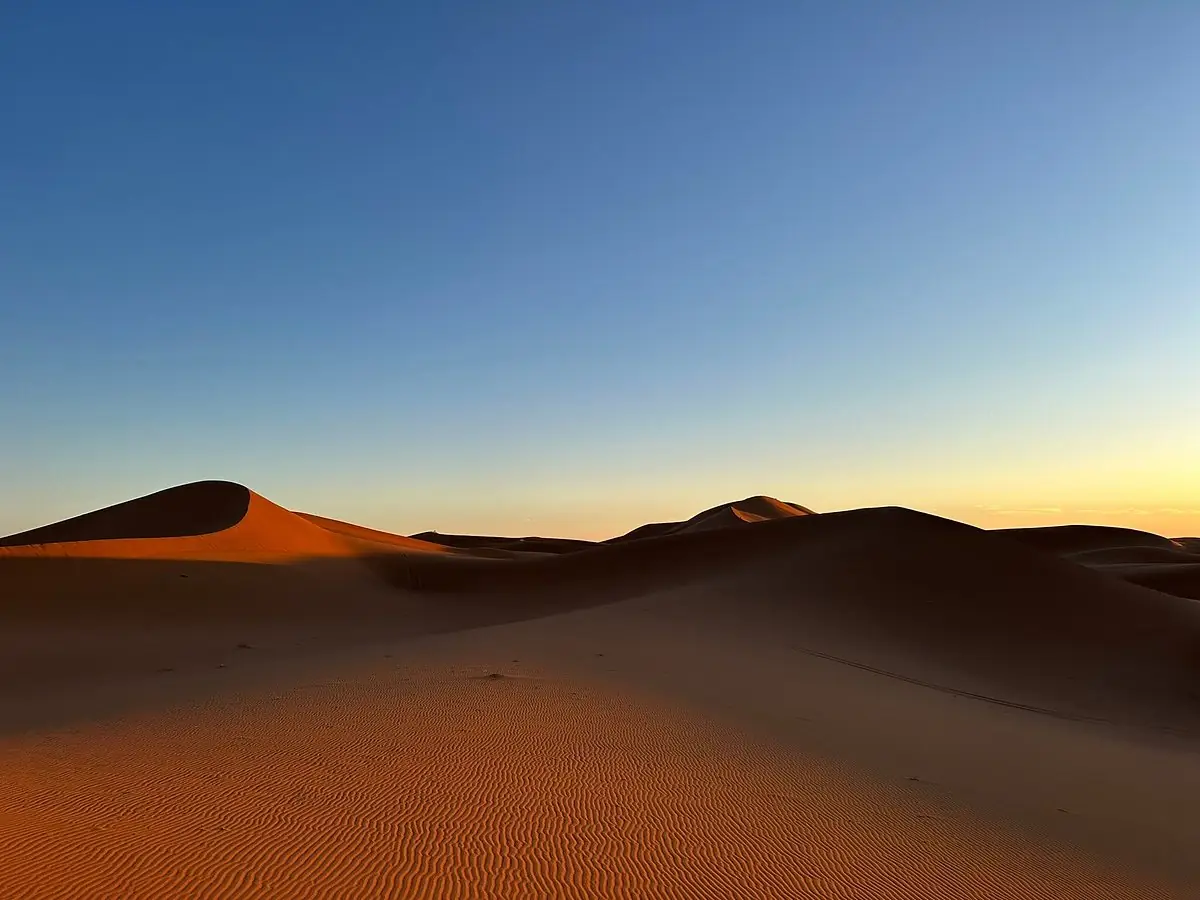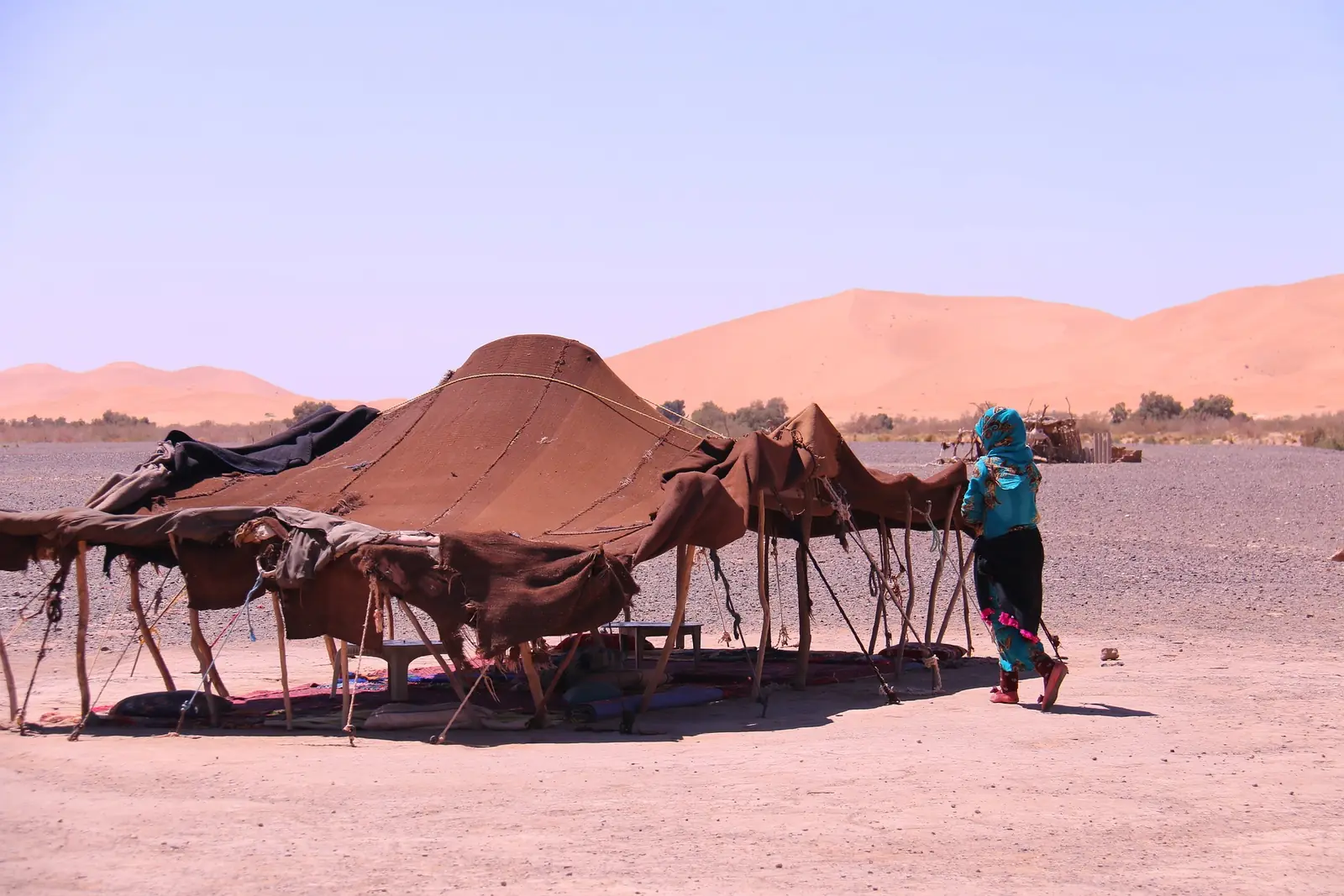
A desert night is colder than most people picture and the middle of the day is brighter. Pack for both, keep the bag small, and you will be comfortable from the Atlas passes to the dunes.
Clothing
Layers matter more than anything else. Days are warm to hot, evenings cool quickly once the sun drops behind the dunes, and nights in winter are genuinely cold.
- Light long-sleeved shirts — cooler in the sun than a t-shirt and kinder to your skin
- One warm fleece or jacket, even in summer, for the camp at night
- Loose trousers or a long skirt for walking in medinas and villages
- A scarf: shade, dust protection and warmth in one
- Swimwear if your accommodation has a pool
Footwear
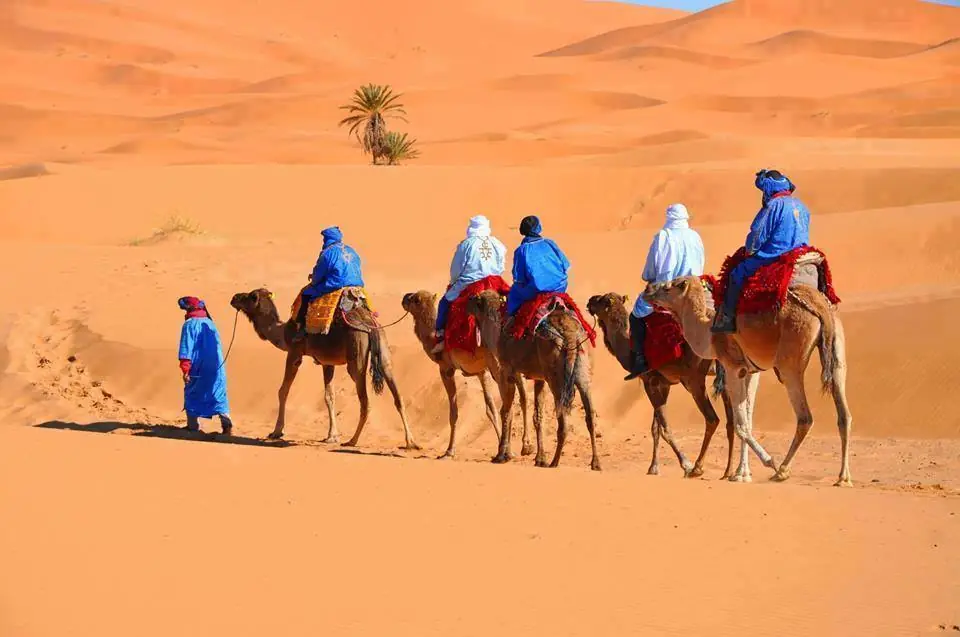
Closed shoes or trainers are right for everything except the dunes. For a camel trek, sandals or bare feet are easier than shoes that fill with sand, and the camp will keep your luggage while you ride out.
Sun and skin
The desert sun is strong even in winter and there is very little shade between stops.
- High-factor sun cream and lip balm
- Sunglasses and a hat with a brim
- Lightweight moisturiser — the air is very dry
Practical items
Desert camps run on limited solar power, so charging is possible but not guaranteed overnight. A power bank removes the worry.
- Power bank and a car-friendly charging cable
- Head torch or phone torch for the camp at night
- Any personal medicines, plus something for an upset stomach
- A small amount of cash in dirhams for markets, tips and cafés
- Refillable water bottle
What you can leave behind
You do not need camping equipment, sleeping bags or towels — camps provide beds, bedding and blankets. Large hard suitcases are also awkward: a soft bag or a medium case is easier in the vehicle and on the camel.
Once your dates are confirmed we send packing notes for the exact season you are travelling in, because January and July need very different bags.