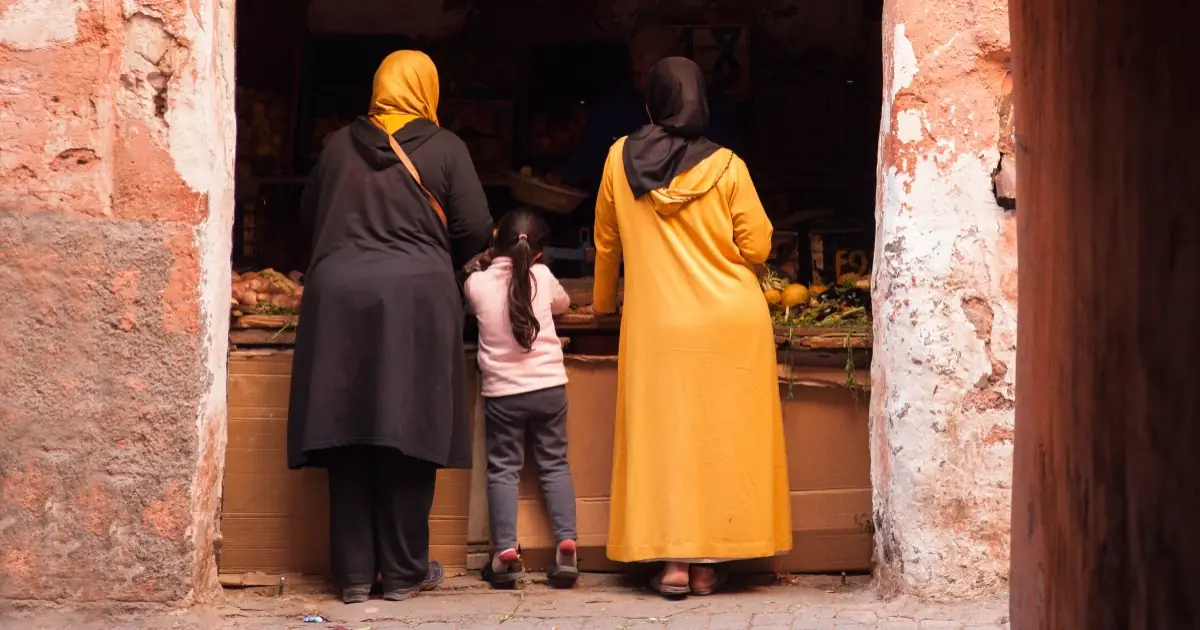
Morocco is a country in the northwest of Africa, located between the Mediterranean Sea and Atlantic Ocean. It has maintained its cultural identity despite centuries of foreign rule. Women have played an integral role in Moroccan society since the earliest days, but their status and rights continue to be challenged by tradition and patriarchy. This article will explore how women are navigating traditional gender roles while striving for greater autonomy over their lives within Morocco’s complex socio-cultural context.
Historical Context of Women in Morocco
Women in Morocco have long been subject to the cultural and social norms of their country, with gender roles heavily influencing how they are perceived and treated. Historically, women were expected to take a submissive role within society and primarily fulfill traditional domestic duties. This was further reinforced by religious beliefs which held that women should remain under the authority of men; however, over time this has begun to change as feminist movements began to challenge these notions.
The emergence of feminism in Morocco can be traced back to the mid-20th century when more women started joining the workforce and taking on public roles outside their homes. This shift had an impact on other aspects such as education where local schools opened their doors for female students, allowing them access to higher educational opportunities previously denied due to societal constraints. Moreover, legal reforms in recent years have allowed Moroccan women greater freedom in terms of marriage rights and political participation.
Though progress is being made towards equality between genders, there remains much work yet to be done before true parity is achieved in all areas of life. Religious ideology continues to set limits on what actions are permissible for women while certain customs still constrain their ability to make decisions independently from male guardians or family members. These challenges must be overcome if meaningful change is going to occur throughout the region so that both sexes may benefit equally from its growth and development.
Women’s Rights in the 21st Century
In recent years, the rights of women in Morocco have been widely discussed and debated. Women’s rights are a central focus within Moroccan society as it works to ensure that all its citizens receive full recognition and respect from the government and other organizations. In order to achieve this goal, many initiatives have been taken on by both governmental and non-governmental actors to improve gender equality, particularly in terms of economic opportunities for women.
The 21st century has seen significant progress with regards to women’s rights in Morocco, although there is still much work to be done before true social justice for all individuals can be achieved. For example, new labor laws have been introduced which aim to reduce workplace discrimination against women, while several programs have been created that provide educational and financial support for female entrepreneurs. Additionally, more attention has been given towards addressing instances of domestic violence against women in order to better protect them from physical harm or emotional abuse.
Despite these advances made over the last two decades, there remain deep inequalities between men and women when it comes to access to economic resources such as well-paid jobs or business ownership. This discrepancy remains largely due to traditional patriarchal norms within Moroccan culture; until these beliefs are challenged at their core level, full economic equality will remain out of reach for many members of society. With continued advocacy efforts along with commitment from key stakeholders across different sectors, a brighter future may yet become reality for Moroccan women.
Gender Equality Laws
In Morocco, gender equality is a complex and multifaceted issue. Despite advances in recent years, the Moroccan government still has much work to do in order to ensure equal rights for women across all areas of life.
The first step towards achieving true gender parity involves the implementation of laws that give women more control over their lives. This includes legislation prohibiting child labor and forced migration as well as laws ensuring access to education, healthcare, and employment opportunities. Additionally, laws should be put into place guaranteeing equal pay between genders and providing social protection services such as pensions and maternity leave.
Furthermore, there must also be greater accountability on behalf of governmental authorities and institutions when it comes to enforcing these new laws so that they are applied equally throughout society. To this end, civil society organizations can play an important role in advocating for the adoption of policies which promote gender equality. A few key initiatives include:
These efforts will no doubt help empower women in Morocco by creating tangible pathways towards greater autonomy, agency, economic independence and freedom. With sustained commitment from both citizens and lawmakers alike, real progress can be achieved in advancing gender equity in Morocco.
- Raising awareness through public campaigns about existing inequality gaps
- Providing legal support to victims of discrimination or mistreatment
- Developing programs aimed at improving female leadership roles within businesses and politics
- Creating networks of grassroots activists dedicated to promoting change from the bottom up
Education and Literacy
Morocco has made significant strides in improving education and literacy levels, particularly among its female population. Over the past decade, access to higher education for women has increased significantly, as evidenced by the number of Moroccan females enrolled at universities. Additionally, recent estimates indicate that Morocco’s overall literacy rate is upwards of 70%, a substantial increase from previous years.
The improved rates of female enrollment in higher education can be attributed to initiatives launched by the government, educational institutions and non-governmental organizations (NGOs). These include gender equality programs within schools and universities designed to encourage girls to pursue their studies. Moreover, NGOs have helped promote awareness about the advantages of educating women, leading many families to support their daughters’ ambitions where they previously may not have done so.
These improvements demonstrate that progress towards greater economic development and social inclusion is possible when citizens are given an opportunity to acquire knowledge and skillsets necessary for success. With continued commitment from all stakeholders involved – including governments, civil society and individuals – such progress will continue to benefit more people than ever before.
Women’s Participation in the Workforce
It is clear that education and literacy are key factors in improving the lives of women in Morocco. However, economic empowerment through access to employment opportunities is also essential for women’s progress. The government of Morocco has implemented a number of policies designed to increase female participation in the workforce:
The result is an increasing percentage of Moroccan women entering into the labor force since 2000, according to World Bank data; from 32% in 2003 to 35% in 2014—a notable improvement but still below the global average of 45%. This shift towards greater workplace equality offers hope that gender disparities can be addressed, enabling more women to enjoy economic independence and helping boost their self-esteem while contributing positively to society at large.
- Strengthening legal protections such as anti-discrimination laws which guarantee equal wages and job security for men and women.
- Promoting vocational training programs for marginalized groups such as rural women or those with disabilities.
- Encouraging small businesses run by female entrepreneurs, providing them with financial assistance and resources needed to succeed.
Political Representation of Women
The political representation of women in Morocco has been a long-standing challenge that is slowly being addressed. Despite the fact that females make up over half of the population, their participation in elected positions and decision-making roles remains significantly lower than men’s. In recent years, however, various initiatives have been launched to expand economic empowerment and legal protection for women within government institutions.
The efforts made by civil society organizations and individuals to promote gender equality are also having an impact on female political representation in Morocco. These include advocating for greater involvement of women in international conferences, workshops and forums; training female politicians; providing resources for policy research and advocacy; and raising awareness about gender issues among local communities. Additionally, there has been increased support from donors towards increasing funding opportunities specifically targeting female candidates running for office at different levels of government.
These collective efforts have already seen some positive results with more women now actively participating in politics as well as occupying higher-level posts across all branches of government. However, it will take continued dedication to eliminate existing barriers preventing full inclusion of Moroccan women into leadership positions while simultaneously addressing underlying causes such as cultural norms which reinforce inequality between genders.
Marriage and Divorce Laws
In Morocco, marriage and divorce laws can be seen as a reflection of the economic disparity between men and women. From an early age, girls are expected to accept that they will have fewer rights than their male counterparts, who possess greater financial freedom upon reaching adulthood. As such, legal enforcement remains heavily weighted in favor of males when it comes to matters concerning matrimony or dissolution thereof.
The law states that females must obtain permission from their fathers before marrying; this stipulation is intended to protect them from potential abuse or exploitation at the hands of would-be husbands. However, there exists no similar requirement for boys. Moreover, while both genders maintain equal claiming rights in child support cases, divorce proceedings remain more difficult for women due to a lack of access to legal advice or representation. In most instances, if the woman initiates the separation then she forfeits any right to alimony payments until after all assets have been divided.
Consequently, Moroccan women often find themselves financially destitute and socially ostracized following a split with their spouse – even though they may not have been responsible for its occurrence. This situation leads many people to hesitate when contemplating entering into marital unions despite the fact that union has strong cultural connotations within society. It is clear that reform is needed in order to ensure basic human rights are protected and enforced irrespective of gender identity or socio-economic standing.
Female Circumcision
Marriage and divorce laws in Morocco have been the focus of much debate over recent years, as they continue to be shaped by religious and social customs. Of equal importance is the issue of female circumcision — a practice that remains prevalent in many parts of the country.
Female circumcision can refer to any procedure involving partial or total removal of external genitalia for non-medical reasons, and it is most often performed on girls between infancy and age 15. This practice not only violates human rights but has lasting physical, psychological, sexual, and reproductive health consequences. It also affects women’s ability to make their own childbearing choices and reinforces gender roles based on inequality.
It is clear from this discussion that female circumcision poses numerous risks with no medical benefits whatsoever. Therefore, it is necessary for Moroccan society to recognize these harms and work together towards ending this outdated tradition once and for all.
- Female circumcision denies victims their right to bodily autonomy
- It undermines a woman’s choice regarding her reproductive health
- Its long-term effects are damaging both physically, psychologically and socially – It can cause serious health complications, such as infection and increased risk of HIV transmission.
Family Planning and Reproductive Health
Morocco is a country that has seen significant progress in terms of poverty reduction, yet when it comes to reproductive rights for women there remains much room for improvement. Despite advances in areas such as healthcare and education, female autonomy over their bodies still falls short. This is evidenced by the fact that Morocco’s fertility rate remains high compared to many other developing countries, due in part to the lack of access to contraception services and limited resources devoted to family planning initiatives.
In addition, cultural norms have historically played an important role in limiting women’s control over their reproductive health decisions. Moroccan society traditionally places a heavy emphasis on motherhood above all else; this means that many married women are discouraged from using contraceptives or even discussing sexual matters with their husbands or doctors. Furthermore, religious beliefs often influence attitudes towards birth control and abortion which further limits options available to women seeking contraceptive services.
The government of Morocco has taken some steps towards improving reproductive health outcomes among its citizens through legislation and financial support for public programs aimed at providing better access to contraception and family planning services. However, despite these efforts more needs to be done if the nation hopes to empower its female population with greater reproductive freedom and reduce rates of unintended pregnancies within the country.
Social and Cultural Norms
Morocco is a country with rich cultural and social norms that have been passed down for generations. Gender roles are an integral part of the Moroccan society, and gender norms heavily influence how people live their lives in this nation. The following provides a visual representation of some of these ideas:
Despite advances being made, it is evident that much work still needs to be done before true equality between genders is achieved in Morocco’s social and cultural fabric. It will require determination, hard work, dedication, commitment, understanding and patience from both sides if lasting change is going to happen anytime soon in this beautiful North African nation.
- The Position Of Women
- Women generally occupy traditional roles within the family unit such as housekeeping, childcare, and cooking.
- They may also take up jobs outside of the home but often face discrimination and unequal pay due to their gender.
- There has been progress made towards improving women’s rights in recent years, however many challenges still remain.
- Religion & Society
- Religion plays a major role in Moroccan culture and influences many aspects of daily life including marital relationships and female dress codes.
- Men traditionally hold positions of power within religious organizations while women often practice religion from their homes or through charitable work.
- Strict laws dictate what is acceptable behavior between men and women which can lead to feelings of oppression among those who do not fit societal expectations.